BOTANICALS · Editorial team, Kaltova · 9 February 2026
Artichoke Extract and Liver Wellness: A Research-Based Overview
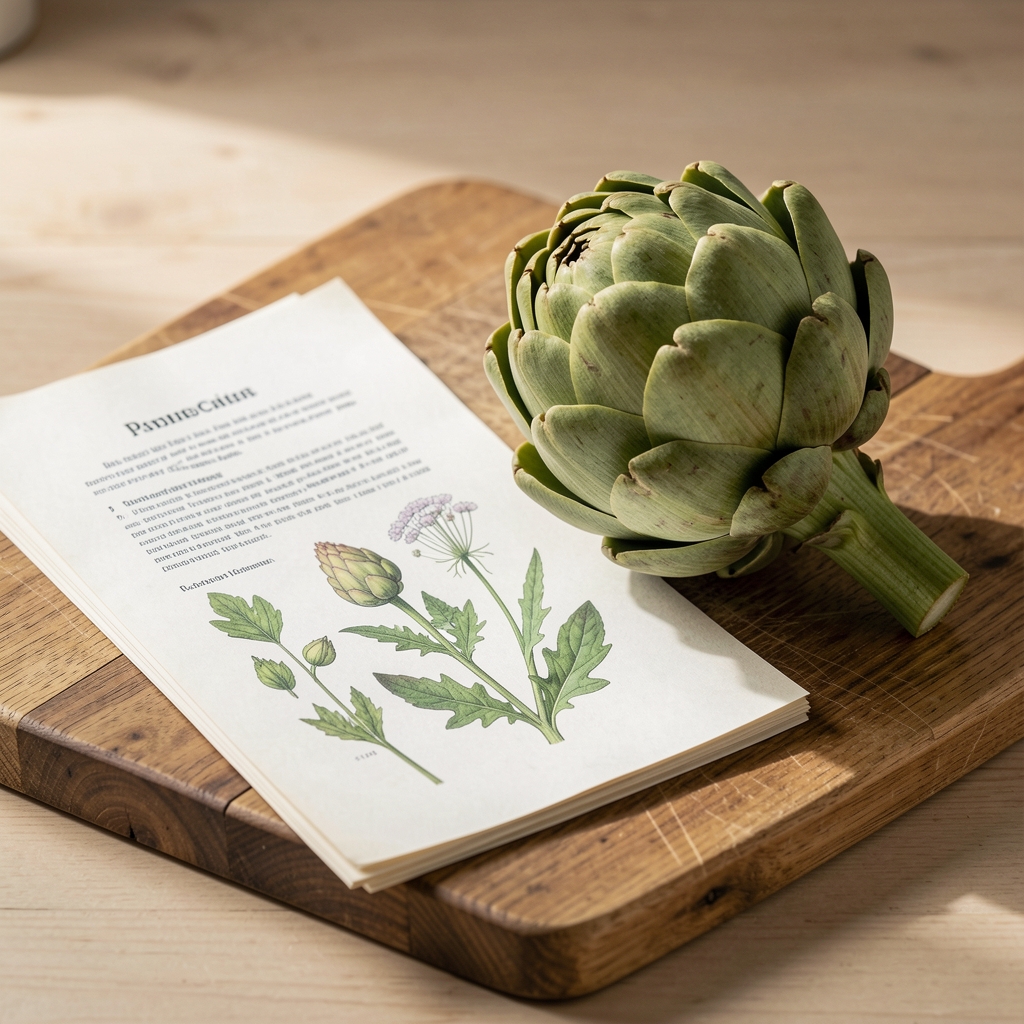
Artichoke extract sits at the meeting point of food, botany and supplement culture. Readers may encounter it in articles about digestion, routine and liver wellness, yet the words used by one source can differ considerably from another. This overview describes the plant, the research vocabulary surrounding extracts and the practical questions that help keep a reading list grounded. It does not assess a particular brand or provide a personal recommendation.
From food to extract
An edible artichoke and a concentrated extract are not identical subjects. Preparation, amount and standardisation determine what researchers are studying.
Food and extract compared
| Feature | Edible artichoke | Extract preparation |
|---|---|---|
| Form | Whole food | Concentrated material |
| Composition | Varies by portion and cooking | Depends on preparation |
| Research question | Dietary pattern | Defined extract and amount |
Three reading anchors
Plant part
Leaves, heads and named fractions may represent different materials.
Preparation
Extraction and standardisation affect what a paper describes.
Outcome
The measured result matters more than a broad headline.
Step-by-step label guide
- Find the plant part and extract description.
- Read the amount per serving and serving assumptions.
- Look for quality and storage information.
- Compare the label with the research preparation.
“The common plant name is only the beginning of a meaningful comparison.”
What studies can tell us
Laboratory observations, population research and human studies each have different strengths. A result in one setting cannot automatically be extended to every person. Laboratory work may explore a pathway, while human research examines a defined outcome in a defined group.
Study duration, comparison group and preparation all influence interpretation. A responsible summary states those limits in ordinary language.
Questions for labels
Readers can look for the plant part, extract ratio, serving information and quality details. Clear labelling supports better conversations. It also makes it easier to identify when two products are not directly comparable.
The presence of a named compound does not describe the full dietary pattern around a reader. Food, routine and personal context remain relevant to the question being asked.
Research vocabulary
Terms such as standardised, concentrated and traditional use can carry different meanings. Readers should check whether a source defines its terms and whether the evidence matches the language used.
When an article moves from describing a study to suggesting a personal action, that transition deserves attention. Evidence-informed writing keeps observation and interpretation distinct.
Questions to record
- Which plant part was studied?
- What preparation and amount were used?
- Who took part?
- What outcome was measured?
- What limitations did the authors identify?
Key takeaways
- Food and extract should be considered separately.
- Study design affects interpretation.
- Personal context remains central.
- Label clarity improves research literacy.
FAQ
Is an extract the same as the food?
No. Concentration and preparation change the subject being compared.
Why check the plant part?
Different parts can have different compositions and research histories.
What does a study outcome mean?
It describes what that study measured, not every possible experience.
This article is for informational purposes only and does not constitute medical advice. Always consult your GP or a qualified healthcare professional before making changes to your diet, supplements, or lifestyle. Kaltova accepts no responsibility for actions taken without professional medical guidance.